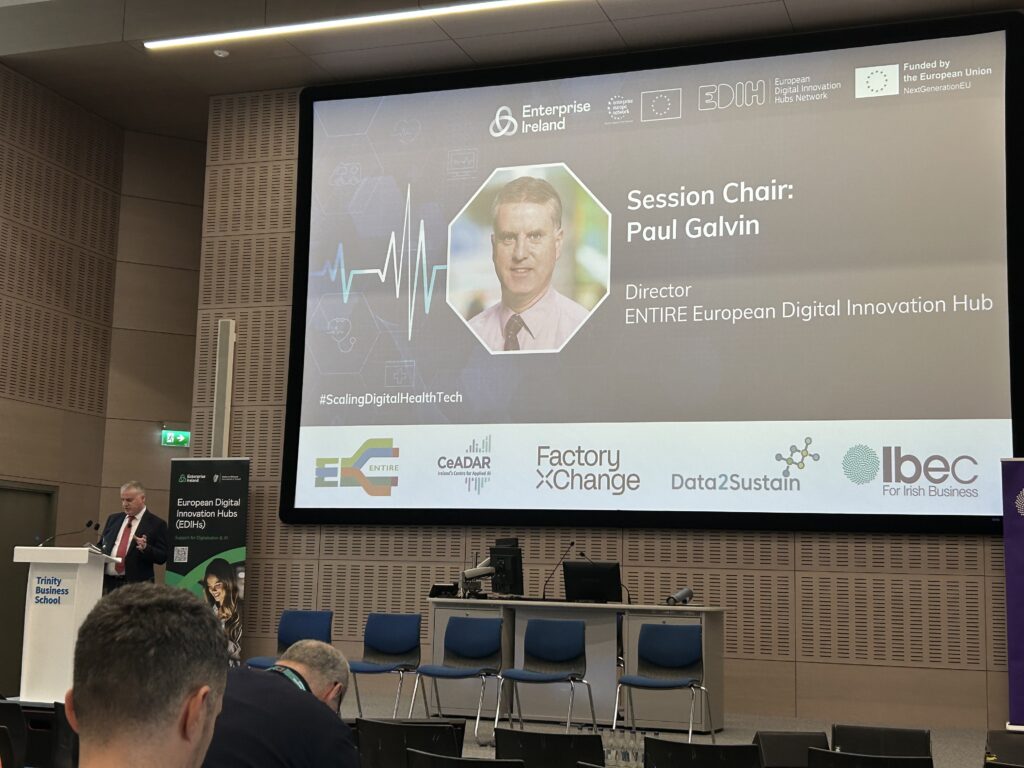
This week NexGen Cyber attended the Scaling Digital HealthTech in Ireland. This event was organised by ENTIRE and brought together founders, policymakers, researchers, and innovators across Ireland’s rapidly growing #HealthTech ecosystem.
What stood out most wasn’t just the ambition it was the reality:
Ireland is in a strong position to lead in digital health, but scaling securely is now the defining challenge.
It was also great to connect with our customer and friend, Xiao Zhang from Alto Health an innovative Irish healthtech company doing excellent work in this space. Conversations like these reinforce the depth of talent and ambition across Ireland’s digital health ecosystem, and the real-world impact these companies are delivering as they scale.
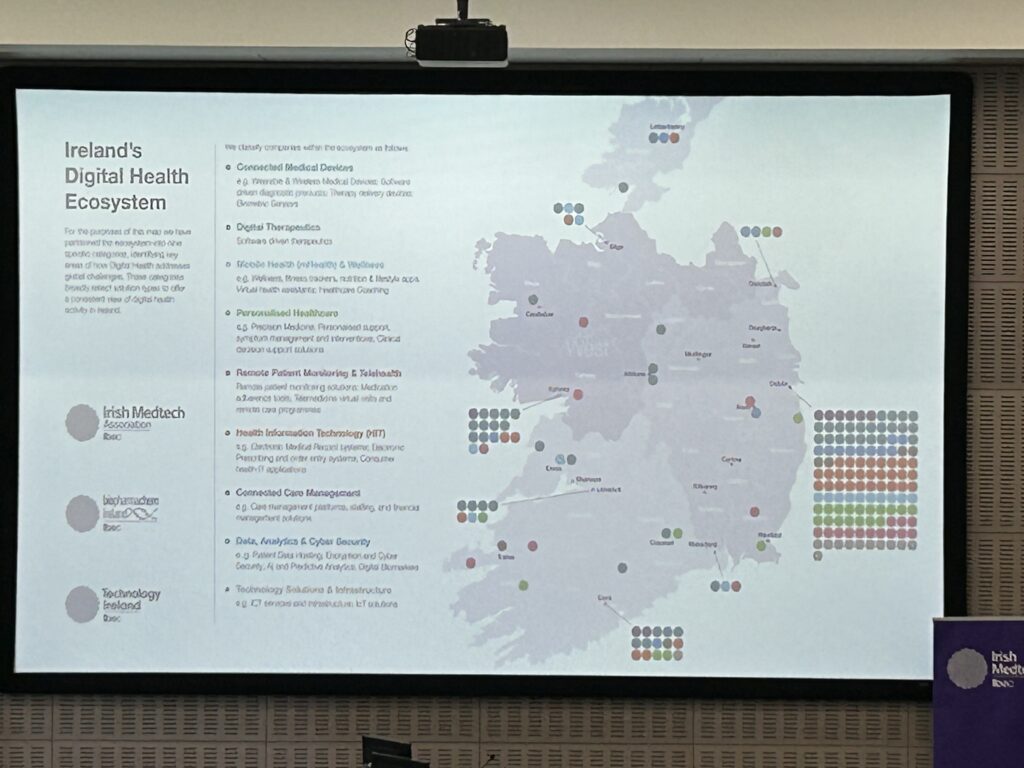
A Thriving Ecosystem Driving the Future of Digital Health
Ireland’s life sciences sector is already a cornerstone of the economy:
- Over 117,000 employees in the sector
- Contributing ~70% of Irish exports (~€178bn)
At both EU and national level, there is a clear strategic direction:
- Accelerate AI adoption
- Invest in innovation and commercialisation
- Position Europe as a global leader in life sciences by 2030
Significant supports are emerging:
- Dedicated funding programmes for SMEs
- European Digital Innovation Hubs (EDIHs)
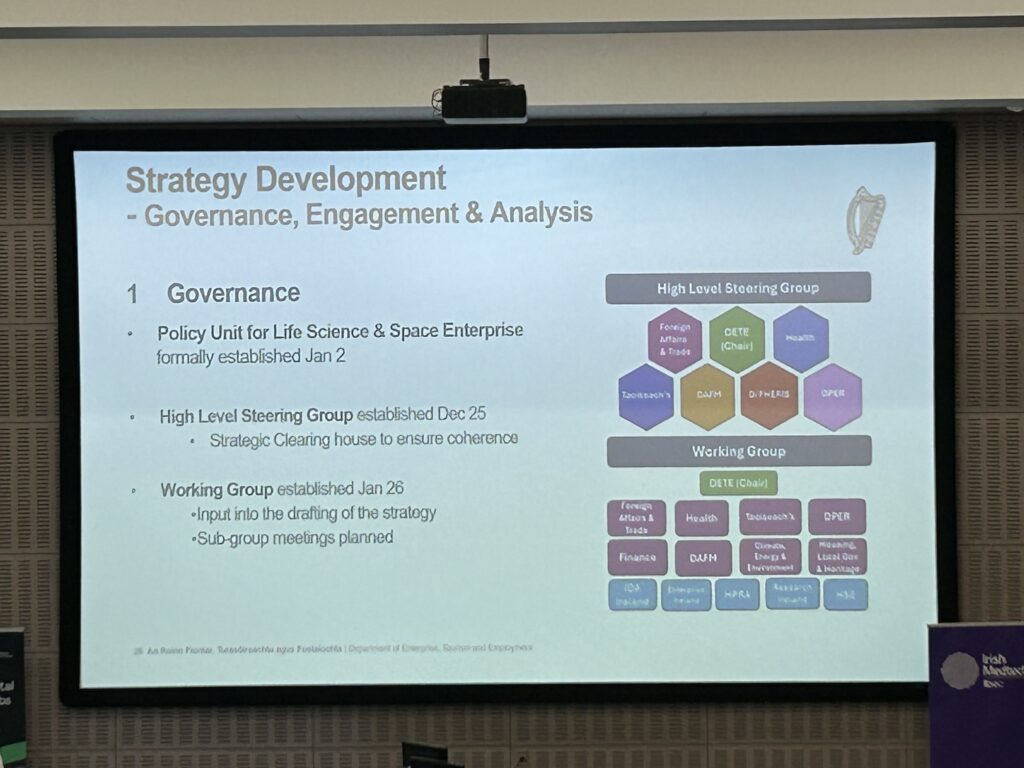
- National AI strategy initiatives
But scaling healthtech is not just about funding or technology.
It’s about navigating complexity and risk.
From Innovation to Implementation: The Real Challenge
Across the sessions, founders shared a consistent reality:
“It’s not hard to find problems in healthcare, what’s hard is finding ones that can become viable businesses.”
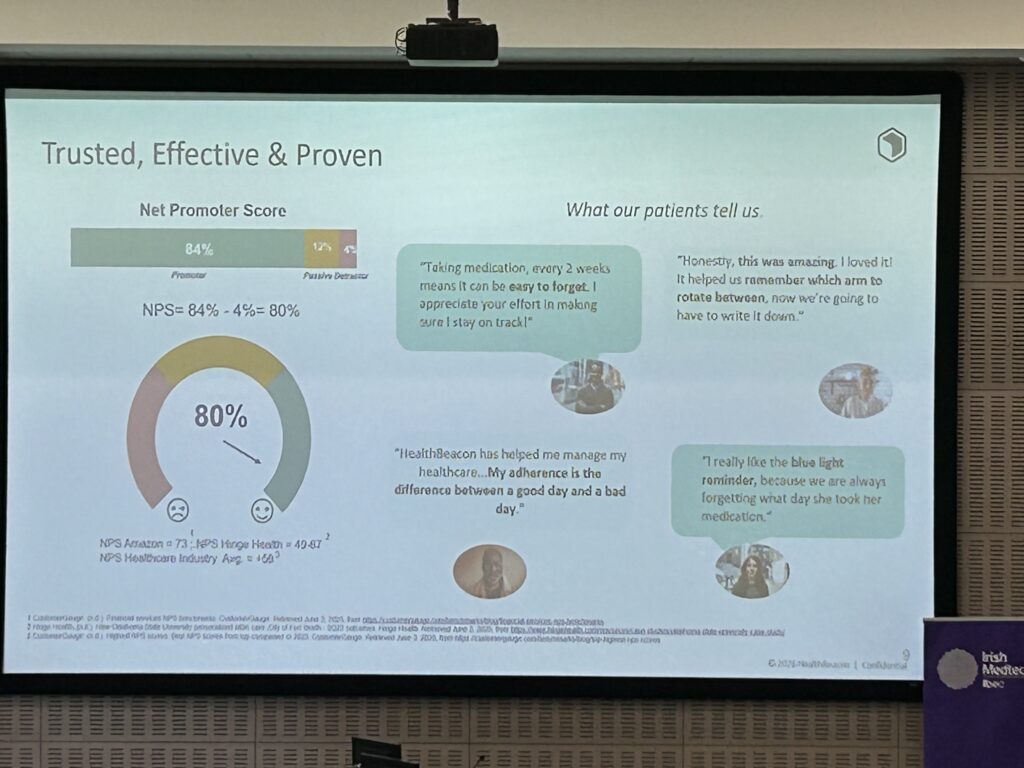
HealthBeacon’s journey illustrated this perfectly:
- Starting with a simple problem: medication adherence
- Scaling to 65,000 patients globally
- Increasing adherence rates from ~50% to 85%
- Achieving FDA approval for a connected medical device
But getting there required:
- Solving clinical problems
- Designing for real-world use
- Navigating regulation
- Building trust with both patients and healthcare systems
Similarly, Reivr demonstrated how even straightforward operational challenges, like locating hospital equipment can have direct impacts on patient care.
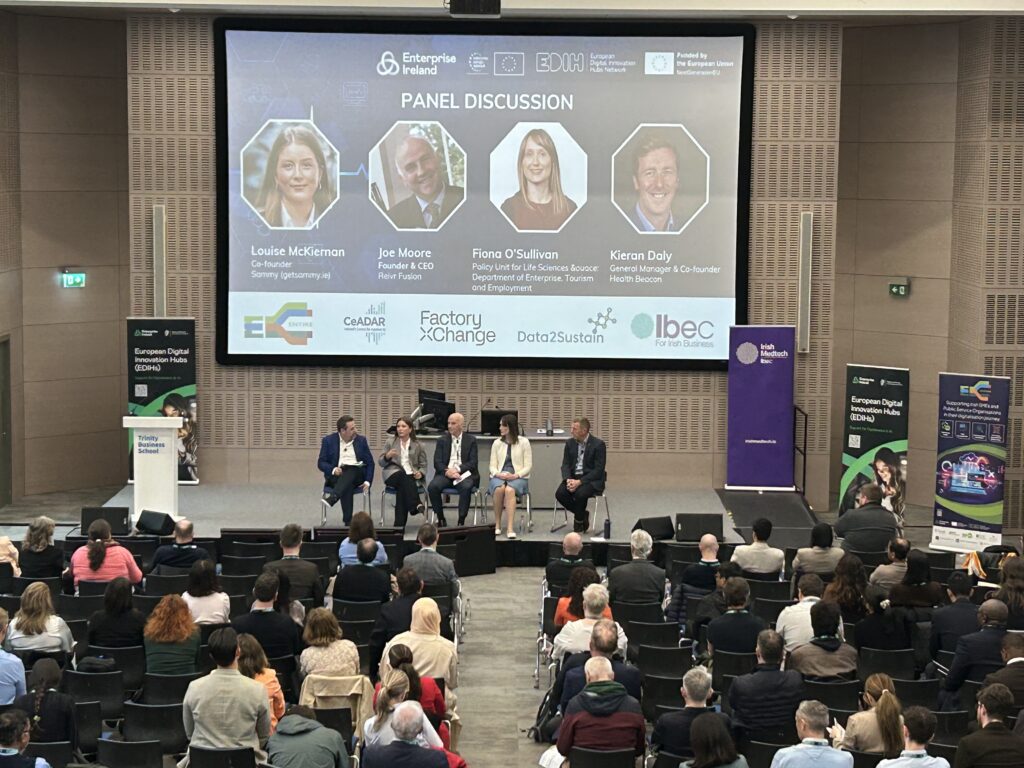
The panel discussion showcased the strength of Ireland’s digital health ecosystem, with contributions from Louise McKiernan (Sammy), Joe Moore (Reivr Fusion), Fiona O’Sullivan (DETE) and Kieran Daly (HealthBeacon). What stood out was the shared experience of founders navigating not just innovation, but adoption, particularly within complex healthcare environments where risk appetite varies widely. Minister of State Niamh Smyth also highlighted the critical role of Ireland’s national AI strategy and innovation supports in enabling companies to scale globally, while acknowledging that challenges around regulation, cybersecurity and integration remain key barriers to overcome.
AI is Accelerating Everything, Including Risk
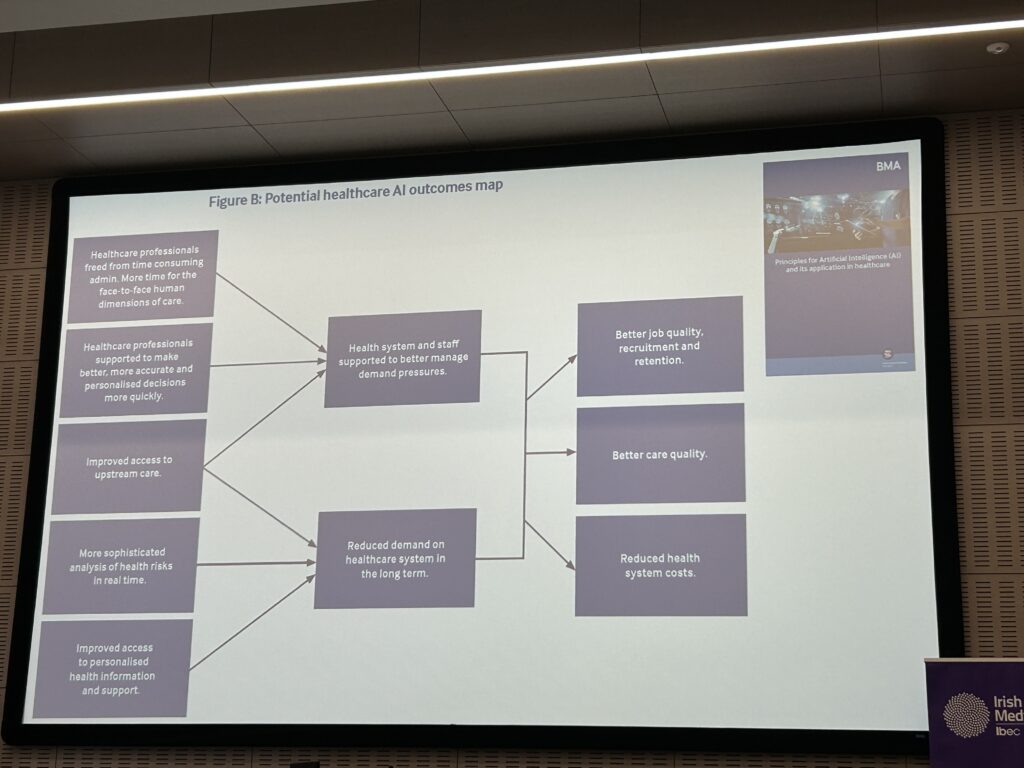
AI was a major theme throughout the day.
We are seeing:
- AI-native startups emerging
- Agentic AI being embedded into business processes
- Health solutions combining wearables, analytics, and predictive models
However, a key insight from Prof. Barry O’Sullivan’s session stood out:
The success of AI in healthcare is not about possibility, it’s about trust.
Frameworks like the EU AI Act are now central:
- Risk-based classification of AI systems
- Requirements for trustworthy, explainable AI
- Strong links between AI governance and data protection
And importantly:
Being “AI-native” does not mean being “AI-compliant”.
For digital health companies, AI is no longer just a feature it is becoming core infrastructure and must be secured accordingly.
Cybersecurity: The Silent Barrier to Scaling
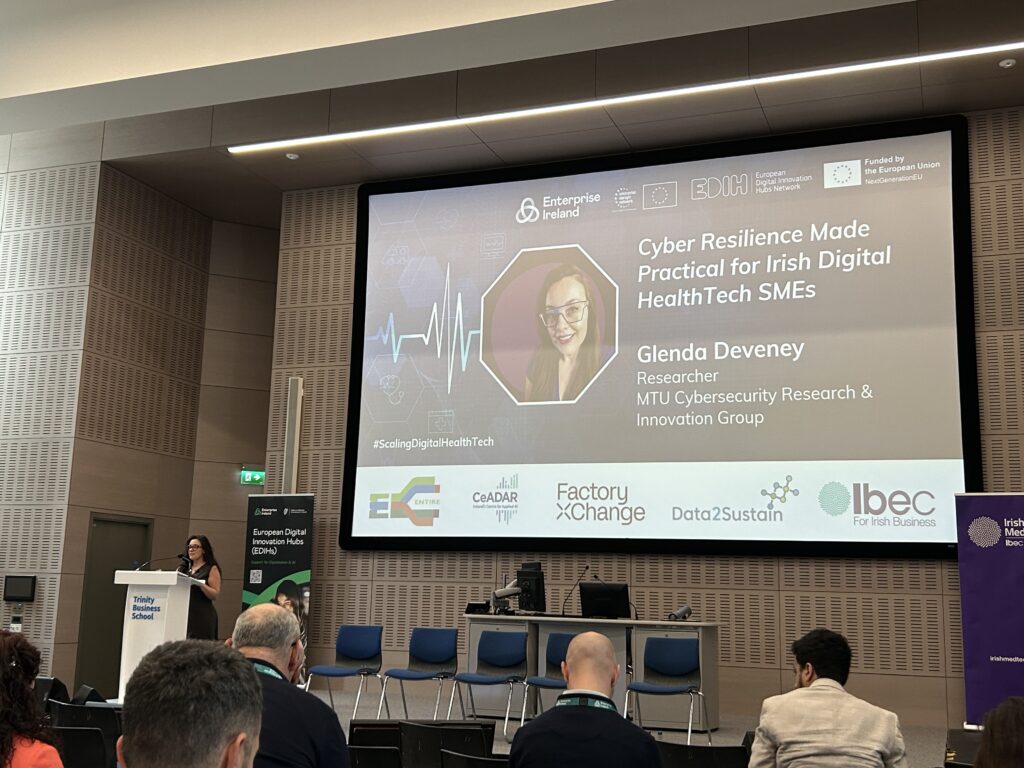
One of the most critical sessions came from MTU’s Cybersecurity Research Group and Glenda Deveney:
- Healthcare is the least cyber-resilient sector (33/100 maturity)
- There is a significant gap between perceived vs actual security posture
- Health data is up to 30x more valuable than financial data
And yet:
Many organisations remain reluctant to openly discuss cyber incidents.
This is a major issue.
As companies scale, particularly into international markets like the US they face:
- Regulatory scrutiny (FDA, HIPAA, AI Act)
- Data protection obligations (GDPR)
- Supply chain and device security requirements
- Increasing targeting by cyber criminals
Cybersecurity is no longer a technical issue it is a scaling barrier.
The Role of Ecosystems: Ireland’s Competitive Advantage
One of Ireland’s strengths is its ecosystem:
- Enterprise Ireland
- European Digital Innovation Hubs
- Health Innovation Ireland
- Strong links between academia and startups
With:
- Over 3,200 services delivered through EDIH programmes
- New funding commitments of €23m+ over the next 3 years
- Access to EU markets through Enterprise Europe Network
This support system is essential, especially for SMEs.
However, there is still friction:
- Time required to engage with support bodies
- Fragmented access to services
- Gaps in connecting hospitals with startups
As several speakers noted:
Speed matters and ecosystems must move as fast as startups.
Where NexGen Cyber Sees the Opportunity
At NexGen Cyber, we work closely with growing health and SaaS companies, and what we see aligns directly with what was discussed yesterday:
1. Security must scale with the business
Start-ups often build quickly, but security maturity lags behind growth.
2. Compliance is becoming a commercial requirement
Customers, partners, and regulators now expect evidence of:
- Secure development practices
- Data protection controls
- Risk management frameworks
3. “Secure by design” is no longer optional
Particularly in:
- AI-driven platforms
- Connected medical devices
- Cloud-native architectures
4. Cyber resilience is a competitive differentiator
Companies that can demonstrate:
- Strong controls
- Transparency
- Trustworthiness
…will win in regulated markets.
Final Thought: Scaling Securely is the Real Challenge
There was a clear message across the event:
Ireland has the talent, innovation, and support structures to lead in digital health.
But success will depend on whether organisations can:
- Scale globally
- Navigate complex regulation
- Integrate AI responsibly
- Build trust with patients and healthcare providers
And critically:
Do all of the above securely.
Closing
Digital health is transforming how care is delivered from the home to the hospital.
But as innovation accelerates, so too does risk.
At NexGen Cyber, we believe the organisations that will lead the next phase of digital health are those that embed security, resilience, and trust from day one.