
Effective cyber incident response often determines whether a security event becomes a minor disruption or a major business crisis. Last week, a local organisation demonstrated how early staff action and a rapid response prevented a cyber incident from escalating into widespread operational impact.
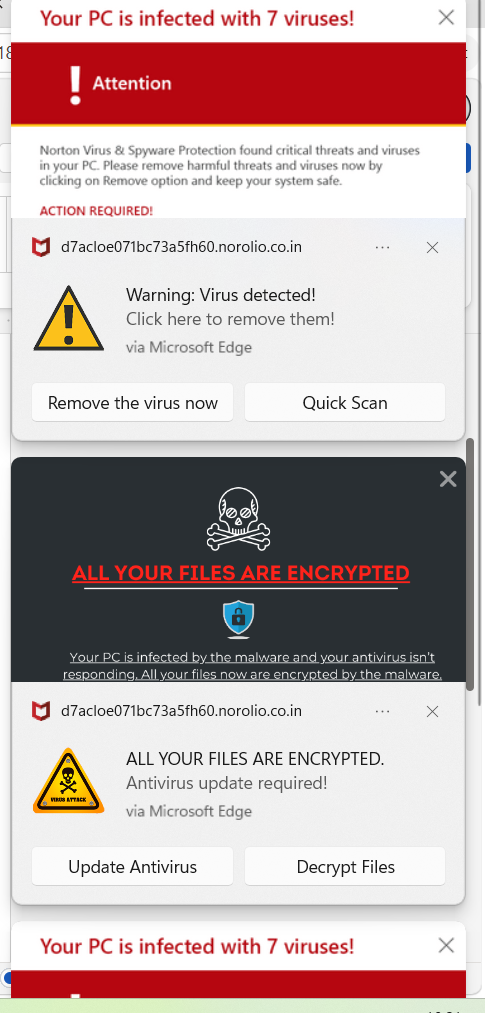
How the Incident Began
The situation started with something deceptively simple:
suspicious antivirus‑style pop‑ups appearing in a web browser on a user’s device.
- There were no alarms blaring.
- No systems were down.
- Nothing obviously “broken”.
But crucially, the individual using the device recognised that something didn’t feel right. Rather than ignoring it or clicking through the messages, they followed internal guidance and immediately contacted NexGen Cyber for advice.
That single decision, to pause and report early, became the most important control of the entire incident.
Why Early Action Changed Everything
Cyber incidents almost never become major incidents in the first few minutes.
They escalate when:
- warning signs are ignored,
- people assume “it’s probably nothing”, or
- organisations don’t know who to contact.
In this case, none of that happened.
Because the issue was reported immediately, NexGen Cyber was able to:
- validate the activity as a genuine threat vector,
- confirm that no malware had been executed,
- verify that no endpoint compromise had occurred, and
- provide immediate containment guidance to isolate risk.
Most importantly, there was no lateral movement across the environment meaning the incident stopped where it started.
What could have spread rapidly across devices, accounts, and systems never had the opportunity to do so.
Containment Beats Clean-up: Every Time
From a technical perspective, the outcome was clear:
- No payload executed
- No ransomware deployed
- No data accessed or exfiltrated
- No business interruption
From a business perspective, the impact was just as important:
- No emergency shutdowns
- No reputational fallout
- No days or weeks of disruption
- No crisis management mode
This wasn’t luck.
It was the result of human awareness combined with a prepared response partner.
Reactive Security vs Proactive Security
Many organisations still approach cybersecurity reactively:
- “We’ll deal with it if something happens.”
- “Our IT provider will sort that.”
- “We’ve never had an issue before.”
But cyber incidents don’t wait for convenient moments and once damage is done, it’s already too late to plan.
A proactive approach looks very different:
- Staff know what suspicious activity looks like
- Reporting channels are clear and encouraged
- An incident response process exists before it is needed
- A trusted partner is already in place
- Action happens within minutes, not days
In this case, proactive preparation turned a potential incident into a near‑miss and near‑misses are where the most valuable lessons are learned.
Ask Yourself: What Would Your Business Do?
If a similar situation happened in your organisation tomorrow, ask yourself honestly:
- Would staff recognise the warning signs?
- Would they know who to contact immediately?
- Would they feel confident raising the alarm?
- Do you have a documented incident response plan?
- Would you know, with certainty, whether an attack had spread?
Most cyber damage doesn’t happen because organisations don’t care.
It happens because they find out too late.
How NexGen Cyber Helps Businesses Stay Ahead
At NexGen Cyber, we work with organisations across the UK and Ireland to help them:
- identify cyber risks before attackers do,
- train staff to act as a first line of defence,
- put clear incident response processes in place, and
- respond decisively when incidents begin, not after they escalate.
Our goal is simple:
to reduce uncertainty, remove panic, and protect business continuity when it matters most.
Free Cyber Incident Response Readiness Check
This incident ended well, but only because the right foundations were already in place. This incident highlights why cyber incident response planning is no longer optional for small and medium‑sized businesses.
If you’re unsure how your organisation would respond under pressure, now is the right time to find out. Our cyber incident response readiness check helps you identify gaps before a real incident occurs.
Talk to NexGen Cyber about:
- a proactive cybersecurity review,
- staff awareness and human‑risk training, or
- building a clear, practical incident response plan tailored to your business.
👉 A single conversation today could prevent months of disruption tomorrow. Get in touch – NexGen Cyber
